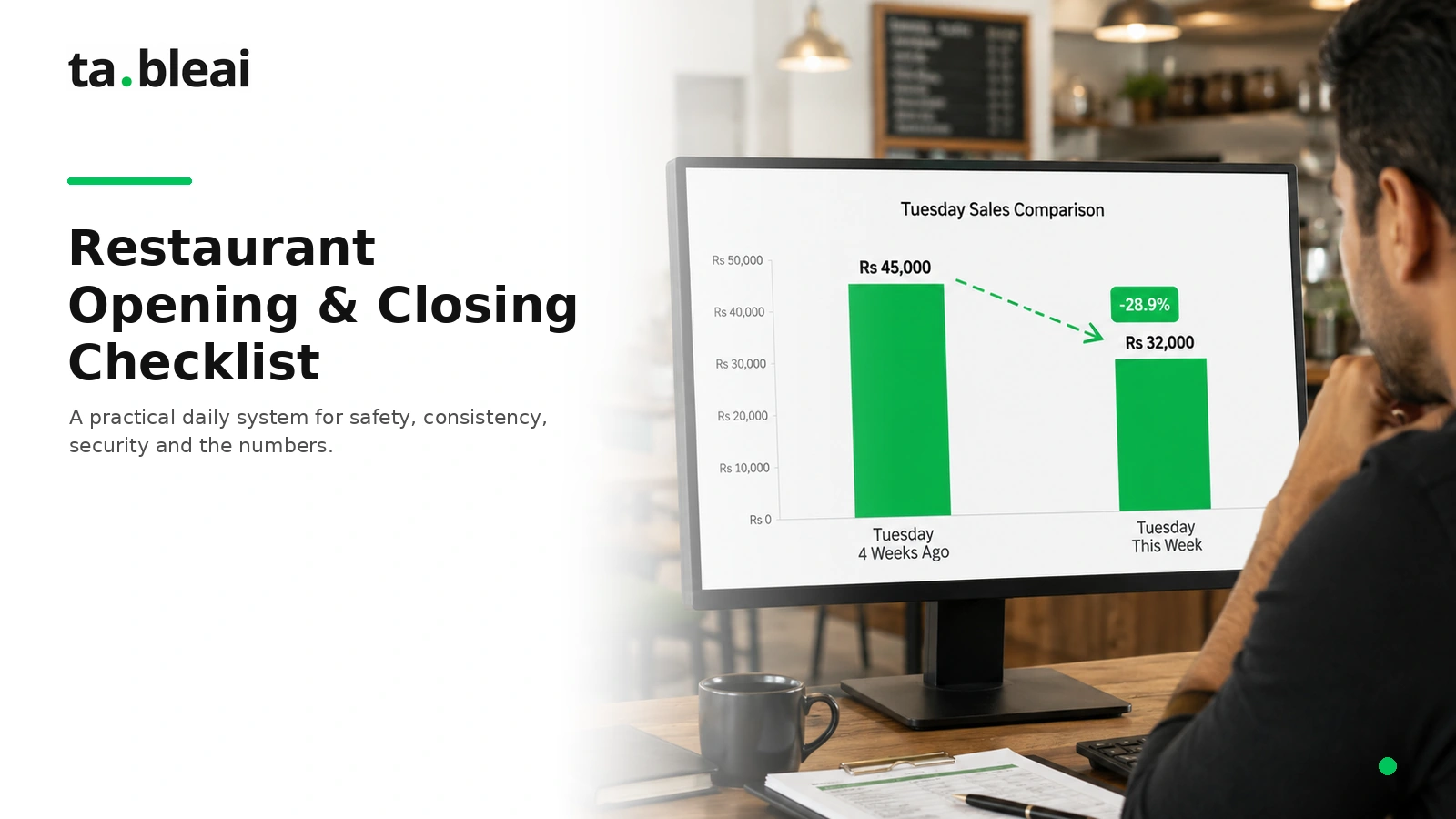
The difference between a restaurant that runs smoothly and one that lurches from crisis to crisis is rarely talent. It is whether the boring stuff happens the same way every single day. A restaurant opening and closing checklist is how the boring stuff happens without relying on one heroic manager remembering everything at 11pm after a double. When it lives only in someone's head, it works right up until that person is sick, quits, or is simply too tired to remember the walk-in door.
A good checklist is not bureaucracy. It is the cheapest insurance you can buy against food-safety failures, security lapses, and the slow margin bleed of small skipped steps. Below is a complete template you can copy for front of house, kitchen, and management. After that comes the part most guides skip, which is how to make a checklist people actually follow.
Use the free manager shift log alongside this checklist to record unusual issues and assign follow-up actions. It includes an editable workbook and a printable blank log.
Why checklists protect your margin, not just your sanity
Checklists get written off as busywork until you add up what a single skipped step actually costs.
A walk-in door left ajar overnight can spoil hundreds of dollars of product by morning. A till not counted and recorded is a sale you cannot verify and a theft you cannot catch. A prep item not labeled and dated becomes a food-safety risk or a guess that ends in the bin. A line not properly cleaned is a health-inspection point waiting to happen. None of these feel like money in the moment. All of them are.
Checklists also protect consistency, which is the quiet engine of repeat business. When opening is done right every day, guests get the same experience whether your best manager is on or your newest hire is covering. That reliability is exactly what turns a first visit into a regular, and it is invisible until it breaks.
The restaurant opening checklist
Opening comes down to one question. Is the building safe, the kitchen ready, and the team prepared before the first guest walks in? Split it by area so each person owns their part.
Front of house — opening
- Unlock, disarm the alarm, and do a quick walk-through for anything wrong overnight
- Turn on lights, music, and dining-room equipment
- Check restrooms are clean, stocked, and working
- Wipe down and set tables, check for wobbles and cleanliness
- Stock host stand, menus, and any printed specials
- Count the opening till and record the starting amount
- Confirm reservations and note any large parties or VIPs
Kitchen — opening
- Turn on and verify all equipment: ovens, fryers, grills, hood
- Check walk-in and reach-in temperatures and log them
- Inspect deliveries against the order and check quality
- Verify prep levels against today's expected volume
- Check that all stored food is labeled, dated, and within date
- Confirm sanitizer buckets and hand-wash stations are set
- Fire up stations and confirm the line is stocked for service
Management — opening
- Review yesterday's sales and today's forecast
- Confirm the schedule matches expected demand, adjust for no-shows
- Run a short pre-shift brief: specials, 86'd items, large parties, one focus for the day
- Check cash on hand and any float needs
- Note anything broken or low that needs ordering
That pre-shift brief is small but powerful. Five minutes of "here's what today looks like" aligns the whole team and is the operational cousin of a restaurant morning briefing, which does the same job with yesterday's numbers.
The restaurant closing checklist
Closing is where food safety and security either happen or quietly get skipped, because everyone is tired and wants to go home. That is exactly why it needs to be a list, not a memory. The order matters: clean, store, secure, reconcile, lock.
Front of house — closing
- Clear, clean, and reset all tables
- Wipe down and sanitize all surfaces, menus, and high-touch points
- Sweep and mop the dining room
- Restock for tomorrow where it saves morning time
- Turn off dining-room equipment, music, and non-essential lights
- Take out front-of-house trash and replace liners
Kitchen — closing
- Break down, clean, and sanitize every station
- Store all food properly, labeled and dated, nothing left out
- Check and log walk-in and reach-in temperatures one last time
- Clean the hood area, grills, fryers, and floors
- Empty, clean, and sanitize sinks and drains
- Take out kitchen trash and break down boxes
- Turn off all cooking equipment and confirm gas and pilots are safe
Management — closing
- Reconcile every till against recorded sales and note any variance
- Record the day's total sales and covers
- Log labor hours for the shift
- Secure cash in the safe or per your deposit procedure
- Do a final walk-through: equipment off, walk-in sealed, water off, no smoldering anything
- Set the alarm and lock all doors
That management close is where the day's numbers get captured. Recording sales, covers, and labor at close gives you the raw material for every number that decides whether you are profitable. Skip it and you are flying blind, which is how most owners end up not knowing their restaurant is losing money until it is serious.
The step most checklists forget: capture the numbers
Both lists end with the manager recording sales, covers, and hours. That single step turns a cleaning routine into a management system, and it is also the one most likely to get skipped at midnight. Yet those three numbers, captured daily, are what feed your prime cost, your labor percentage, and every other KPI worth tracking.
A tired closing manager scribbling numbers on a scrap of paper is a system that fails often, and that gap is where TableAI fits the close. Instead of a clipboard, the closing manager texts the day's sales and covers into WhatsApp, attendance is already logged, and by 7am the owner has a briefing with yesterday's numbers waiting. The closing checklist's most important step, capturing the day, stops depending on someone remembering to file a sheet. See how it fits the daily flow in running a restaurant from your phone, or check TableAI's pricing.
How to make the checklist actually stick
A checklist taped to the wall that nobody verifies is decoration. Four things turn it into a habit:
1. Assign every section to a role, not a person. "Closing line cook" owns the kitchen close, whoever is in that slot. It survives turnover.
2. Require a sign-off. A name and time next to a completed section creates ownership. People do the step they have to put their name on.
3. Have a manager spot-check. Not every item every day, but a rotating check that the sign-offs are honest. Once staff know closings get verified, they get done.
4. Keep it short and real. A 40-item list that cannot be finished on a busy night trains people to fake it. Cut it to the steps that genuinely matter, safety, security, and the numbers, and it gets respected. A checklist you can actually complete beats a perfect one nobody uses.
Revisit the lists every few months. Menus change, equipment changes, and a checklist that no longer matches the real close quietly loses authority. Keep it current and it stays trusted.
Frequently asked questions
What should be on a restaurant opening checklist?
An opening checklist should cover unlocking and safety checks, turning on and verifying equipment, checking food temperatures and stock, setting up front of house, counting the till, and a quick pre-shift brief. The goal is to confirm the building is safe, the kitchen is ready, and the team knows the plan before the first guest arrives.
What should be on a restaurant closing checklist?
A closing checklist should cover cleaning and sanitizing all surfaces and equipment, storing and labeling food, breaking down stations, reconciling the till and recording sales, taking out trash, and locking up with all equipment safely off. Closing is where food safety and security either happen or quietly get skipped.
Why are restaurant checklists important?
Checklists turn a good manager's memory into a repeatable system that survives busy nights, new hires, and days off. They protect food safety, security, and consistency, and they prevent the small skipped steps, a fridge left ajar, a till not counted, that quietly cost money and cause failures.
How do I get staff to actually use the checklist?
Make it short and specific, assign each section to a role, require a sign-off, and have a manager spot-check. A checklist nobody verifies becomes decoration. Tie it to accountability, and keep it to steps that genuinely matter rather than a wish list nobody can finish.
Should opening and closing be the same checklist?
No. Opening confirms readiness and safety before service, while closing confirms cleanliness, security, and reconciliation after it. They share a mindset but cover different tasks, so keep them as two separate lists, ideally split further by front of house, kitchen, and management.
Bottom line
A restaurant opening and closing checklist has nothing to do with control for its own sake. It is how consistency, food safety, and security survive tired nights, new hires, and your day off. Split it by area, keep it to steps that genuinely matter, and make sure the close ends by capturing the day's sales, covers, and hours. That last step feeds every number you manage by.
The best checklist is the one your team actually completes, which means short, role-owned, and verified. Get that habit in place and the boring stuff happens the same way every day, which, in a business this unforgiving, is most of what separates the places that last from the ones that quietly slip.
Related reading: