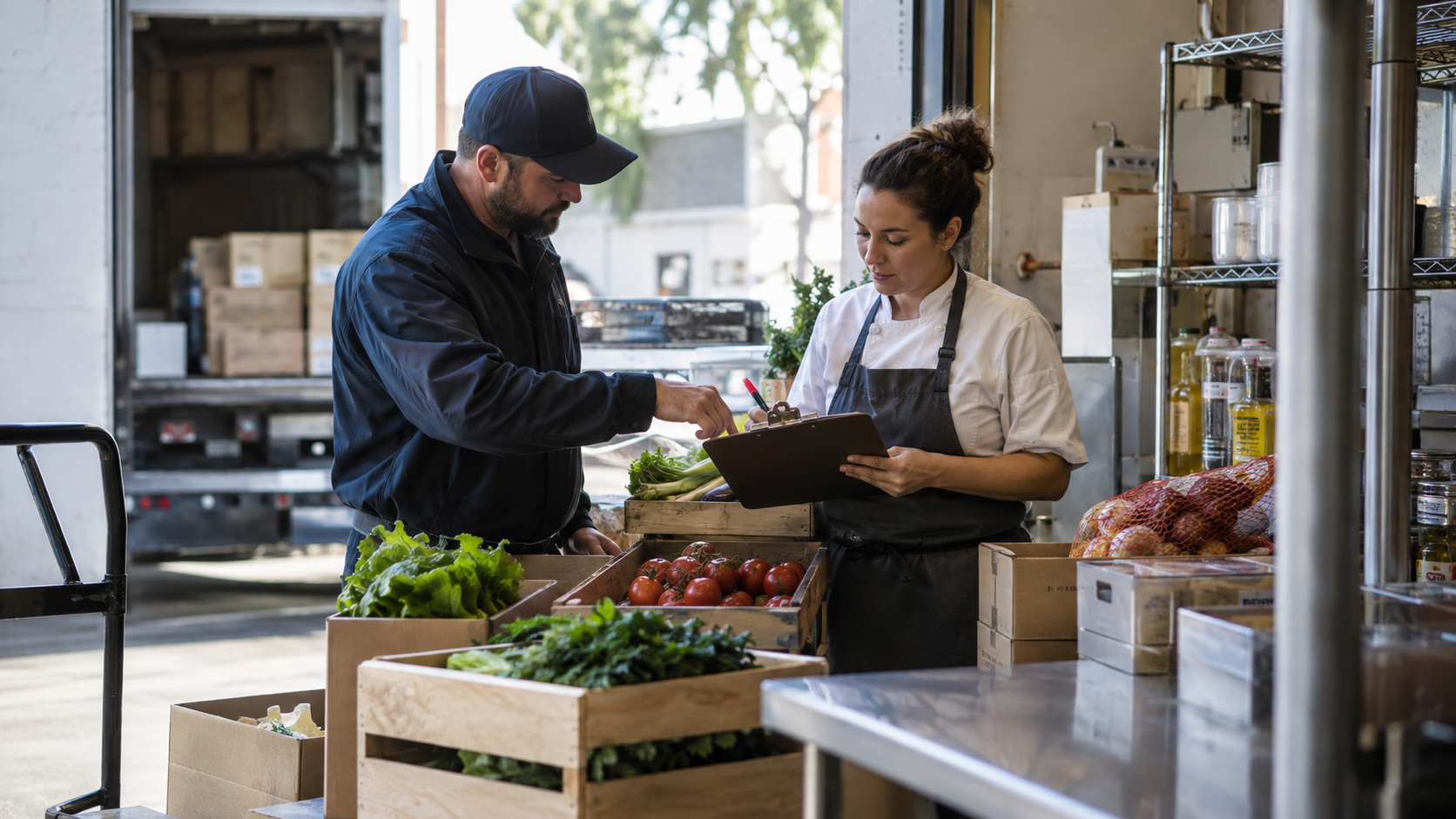
The delivery driver is waiting, prep is starting, and someone is asking where the produce goes. That is exactly when a restaurant receiving checklist earns its place.
Receiving is not a paperwork ritual. It is the short handoff where you confirm that the ingredients, packaging, and supplies you are paying for are the right items, in usable condition, in the promised quantity. Once a box is unpacked and a driver has left, a small discrepancy becomes much harder to resolve.
Give the handoff a clear owner
Choose people who understand the products and can flag a problem: a chef, manager, owner, or trained receiving lead. They need the order confirmation, a clean place to inspect goods, and a quick way to record shortages, substitutions, damage, temperatures, and credits.
The important part is not the title. It is that the person is not expected to sign first and inspect later.
Check deliveries in a sensible order
You do not need to open every carton of dry goods. Put attention where the risk is highest.
Match the order
Confirm the supplier, location, expected item, pack size, and quantity. Look first for missing products, substitutions, and amounts that are unusually high or low. A substitution is not automatically a problem, but it should be a decision. A different pack size can change unit cost, recipe yield, storage, or allergens.
Count important items
Count cases, bags, trays, or units in the same language as the invoice. Be especially careful with high-value proteins, specialty items, and fast-moving supplies. Keep inventory units explicit: if your sheet says kilograms but an invoice says cases, write down the conversion. It makes later inventory variance reviews much more useful.
Inspect condition and dates
Look for tears, leaks, dents, swollen containers, broken seals, and signs cold items have warmed. Check date codes where relevant. Follow your food-safety plan and local requirements for temperature checks and rejection decisions; this checklist supports that work, it does not replace it.
Record exceptions before the driver leaves
Write down shortages, damaged cases, rejected products, substitutions, and price differences while they are visible. Take a photo when useful. "Supplier issue" is not enough for the next manager. "Two damaged tomato cases rejected; credit requested at 9:15am" gives the team something concrete to follow up.
Put goods away promptly
Receiving ends when stock is safely stored and rotated, not when the note is signed. Move perishables to the right storage, separate foods according to your procedures, and use older usable product first.
A compact restaurant receiving checklist
| Check | Confirm |
|---|---|
| Order | Supplier, location, approved item and pack size |
| Quantity | Cases, weight, or units match the delivery note |
| Condition | Packaging intact; no obvious damage or spoilage |
| Dates and temperature | Appropriate for the product and your food-safety process |
| Price | Unexpected price or pack-size changes noted |
| Exception | Shortage, rejection, or credit described clearly |
| Storage | Goods put away promptly and rotated |
Make the record useful later
Receiving notes help explain cost and stock changes. If food cost rises, you can check whether pack sizes changed. If an ingredient disappears quickly, you can confirm what actually arrived. If supplier prices move, compare the cost per usable kilogram or litre--not merely the case total. Our supplier price comparison guide walks through that calculation.
If a delivery is repeatedly late or short, revisit the item's par level. Service should not depend on a delivery window that has stopped being dependable.
A receiving example: when the paperwork looks right but the delivery is not
Imagine a lunch restaurant expecting six cases of tomatoes, two cases of chicken, dairy, and dry goods. The delivery note lists the right products. At the door, however, one tomato case is crushed, the chicken case label shows a different weight than the order, and one dairy crate has a date too close for the planned weekend use.
A rushed receiver might sign, put everything away, and discover the issue during prep. A better process is calm and specific: count the usable cases, photograph the damaged carton, compare the chicken weight to the ordered specification, record the date concern, and ask the driver or supplier contact how the credit or replacement will be handled. The kitchen can still accept the items that are correct while preserving evidence for the exceptions.
This does not need an argument at the back door. It needs a shared record made before the evidence disappears.
Create a short exception process
Every restaurant should know what happens after an exception is found. Decide in advance who can reject an unsafe or clearly damaged product, who contacts the supplier, where photos or paperwork are stored, and who checks that a promised credit appears. Without ownership, a $20 discrepancy may seem too small to chase--until the same issue happens every week.
A short record can include the supplier, delivery number, item, problem, quantity affected, action promised, and follow-up owner. It is enough for the next manager to see whether the issue is resolved. Avoid a separate notebook nobody remembers to check; attach the note to the invoice process or regular manager handover.
Receiving, storage, and food safety are one workflow
Checking the delivery is only the first step. Ask where each item will go before the truck arrives. Perishables should not sit on the floor while someone clears space. Products should be rotated using your normal date and food-safety procedure. If there is no room, that is not a reason to leave chilled food in the receiving area; it is a signal to revisit ordering, storage layout, or the delivery schedule.
Separate the operational question from the food-safety decision. A product can be financially inconvenient and still usable; it can also look fine on an invoice and be unsuitable to accept. Follow the rules and training that apply to your location and menu.
Make supplier conversations more productive
Good receiving records help you have a factual supplier conversation. Instead of saying "your deliveries are often wrong," you can say that three of the last five deliveries had a short item, damaged produce, or an unapproved substitution. That gives both sides a chance to fix a route, packing issue, or order process.
Compare patterns before changing suppliers. A cheaper quoted case price may not be cheaper when pack sizes, usable yield, delivery reliability, and credits are included. Keep the receiving note beside the supplier price comparison, not in a separate universe.
Train for speed, not just completeness
New managers and chefs should practice the routine on a normal delivery. Show them which products demand close attention, how to count a partial case, and when to call for a second opinion. A checklist works when people can use it quickly under pressure. It fails when it is so detailed that the team learns to tick every box without looking.
Where TableAI fits
TableAI can preserve a short delivery or stock update sent through WhatsApp so the next manager sees what arrived late, was short, or needs follow-up. It does not inspect products, verify temperatures, or reconcile supplier invoices automatically. Those decisions need the person receiving the goods.
Common questions
Who should receive restaurant deliveries? Assign trained people who can compare the delivery to the order and know what to do when something is wrong.
Should we refuse the whole delivery if one item is wrong? Not automatically. Follow your supplier agreement and food-safety process, document the issue, and accept only what you can verify and use safely.
Do invoices replace a receiving log? An invoice shows what was billed. A brief receiving note captures what arrived and what went wrong.