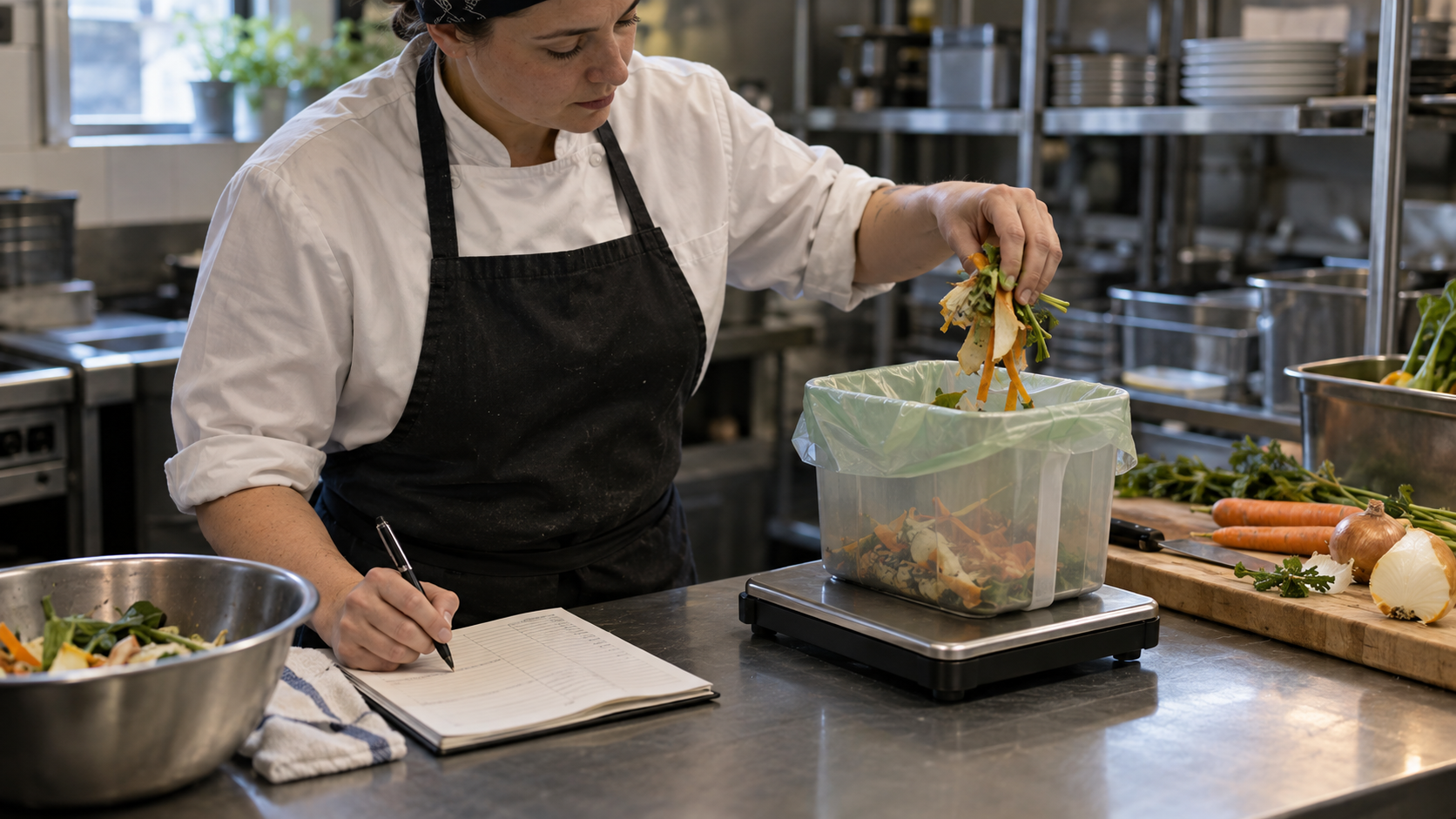
A waste log is not there to make a kitchen feel watched. It is there to answer a stubborn question: what is leaving the restaurant without becoming a sale, and why?
Most restaurants know waste exists. The useful part is getting beyond "we throw away too much produce" and seeing whether the issue is over-prep on Mondays, a damaged delivery, inconsistent portions, a menu item that no longer sells, or one recurring storage problem.
Start with the waste worth noticing
Trying to log every peel and parsley stem is a reliable way to make the form disappear after three days. Begin with items that are expensive, high-volume, perishable, repeatedly over-prepped, linked to returns, or important to food cost. For many restaurants that means proteins, dairy, produce, prepared sauces, bread, and costly garnishes.
Record five useful details
| Field | Why it matters |
|---|---|
| Date and shift | Shows whether waste clusters around a time or routine |
| Item and quantity | Makes the event measurable in a repeatable unit |
| Reason | Separates spoilage, over-prep, error, return, damage, and staff meal |
| Estimated cost | Helps prioritize without pretending every figure is exact |
| Short note | Preserves context needed to prevent a repeat |
Use a small set of reason codes. "Spoilage," "overproduction," "cooking error," "customer return," and "damaged on delivery" are more useful than a blank field called "other." Keep an open note for exceptions, but do not ask people to write an essay during service.
Do not hide normal production loss
Some loss is expected: vegetable trimming, bones from meat, and cooking yield changes may already be allowed for in a recipe. Record unusual loss separately. A case of herbs with normal trim is different from a case that arrives wilted and cannot be used. Both reduce usable product, but they point to different fixes.
Recipe yield matters here. If a recipe assumes 90 percent usable yield but the kitchen routinely gets 75 percent, the food-cost calculation was wrong before anything reached the bin. Revisit the numbers with the restaurant food cost calculator guide.
Review once a week
Gather the entries and ask which three items created the most cost, whether waste clusters around a shift, and whether the cause was prep, storage, delivery, service, or portioning. Then test one small change. If soup is repeatedly discarded after Tuesday lunch, make a smaller first batch. If dairy expires unopened, adjust the order frequency or par level.
A waste log is evidence, not a verdict. Known waste may explain part of an inventory variance, but it will not explain every difference. Counts, receiving, transfers, portions, and recipes still matter.
Use the log to support people
A kitchen that fears blame will record less. Make it clear that reporting an error protects the restaurant. The best entry is often the honest one: a dropped tray during a rush, a wrong sauce batch, or a delivery rejected for quality. Repeated patterns deserve a conversation, but start with the work system: the recipe, storage, prep area, training, or schedule.
A waste review example
A small restaurant logs 14 entries in one week. The headline number is not especially useful until the team sorts it. Most of the cost comes from prepared chicken, wilted herbs, and soup. The chicken entries appear after lunch on two slow weekdays. The herbs were stored behind newer deliveries. The soup was made to the same large batch size despite lower Tuesday demand.
None of those findings calls for a dramatic policy. The team can test smaller first chicken batches, move herbs into a clearer rotation spot, and make half the soup early with a scheduled afternoon decision. In the next review, compare the results. A waste log earns its keep when it turns a recurring annoyance into a small, testable operational change.
Make costs useful without making them perfect
Use the last purchase price or a simple standard cost for each important item. If 2 kg of chicken is discarded, multiply the recorded quantity by the usable cost per kilogram. You do not need to allocate rent, labor, and every condiment to learn that chicken waste deserves more attention than a handful of parsley.
The point of an estimated cost is prioritization. It lets the kitchen see whether its biggest opportunities are expensive proteins, frequent small losses, or one menu item that is repeatedly overproduced. Keep the method the same from week to week; consistency makes trends easier to see.
Add waste prevention to the daily routine
The best time to prevent waste is often before prep begins. Review what is usable before making a new batch. Rotate stock so older product is visible. Label prepared food with the date and time according to your process. Use smaller first batches for uncertain service periods and have a planned point to make more.
During service, give people a quick way to record a meaningful loss. A note, tally sheet, or designated container with a simple form is enough. The log should be near the work, not locked in an office. After service, take two minutes to make sure major events have a reason and quantity attached.
What not to count as waste
Do not blur planned use and discarded use. Staff meals, tasting, planned donations, and properly documented transfers may need their own records. They still affect food cost and inventory, but they answer different questions. If every non-sale is placed in one waste bucket, the report becomes less useful instead of more honest.
Also avoid turning a waste log into a catch-all for an unexplained inventory gap. If an item has vanished but nobody observed waste, record the known facts and investigate receiving, portions, recipes, transfers, and counts. The inventory variance guide explains that distinction in more detail.
A simple weekly meeting agenda
Keep the review short enough to happen. Start with the three highest-cost entries, identify the likely source, decide one change, name the person who will test it, and set a date to review the result. If the conversation becomes a long list of every small loss, people will stop seeing the important pattern.
Where TableAI fits
TableAI can preserve a short waste or stock note through WhatsApp so the context is available in the morning briefing. It does not weigh waste, calculate recipe yields, or identify the cause of a food-cost change automatically. For broader ways to reduce preventable loss, read how to reduce food waste in a restaurant.
Common questions
Should staff record every waste item? Start with the waste that is expensive, repeated, avoidable, or useful to understand. A log that is too demanding will be ignored.
Is a waste log the same as inventory variance? No. A waste log records known waste when it happens. Variance compares expected and actual inventory movement.
How do I estimate the cost? Use the recent purchase cost per usable unit. Consistency is more useful than false precision.