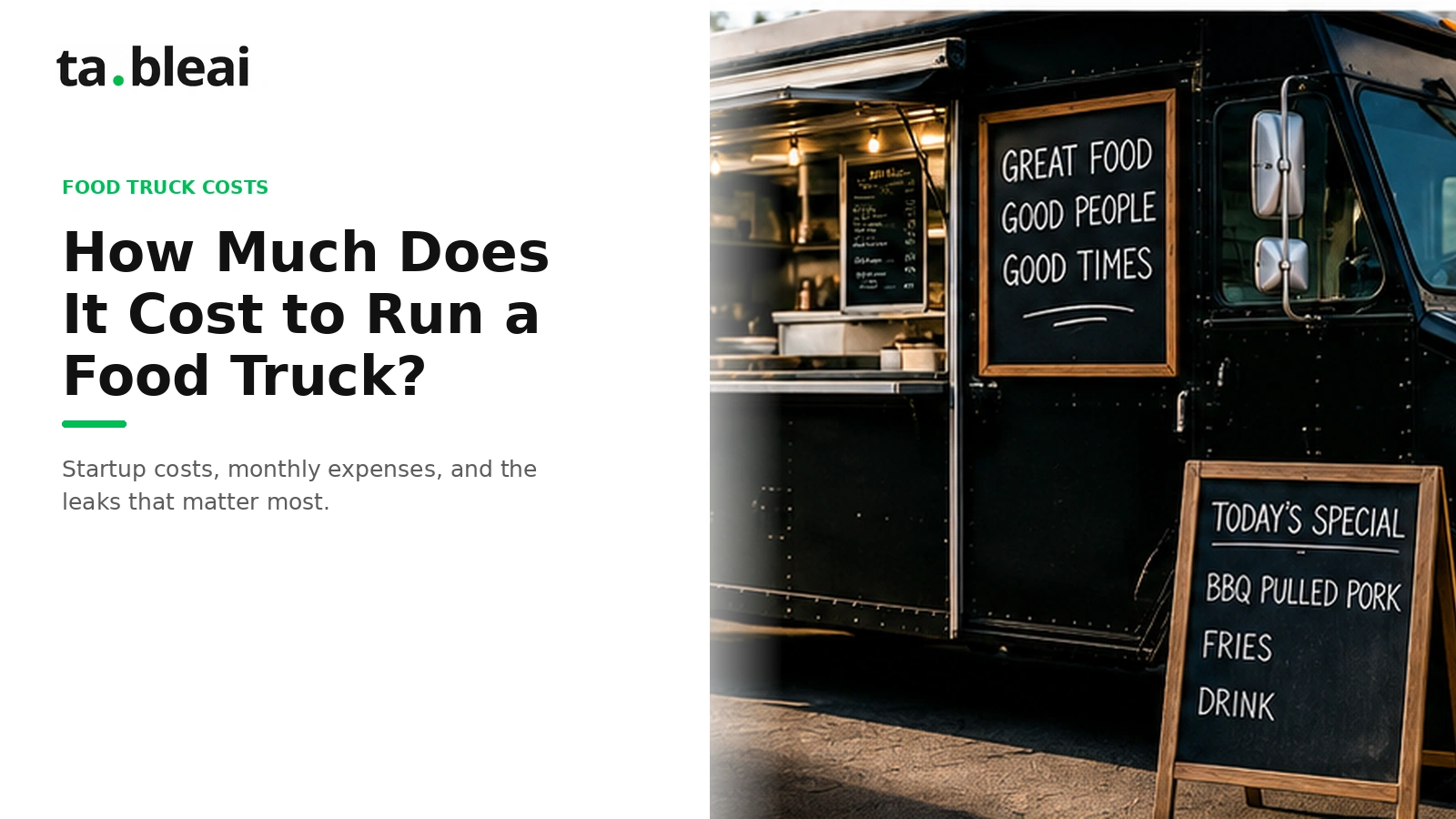
Food truck costs depend on the vehicle, menu, location, staffing, and how much equipment is already installed. Build two budgets: the money needed before opening and the expenses you must cover each month.
For a published reference point, Toast's August 2026 food-truck cost guide gives an approximate startup planning range of US$75,000–$250,000 or more. That is a vendor's planning estimate, not a national average or a quote for your truck. A used setup can cost less, and a custom build can cost more.
The example below uses US dollars. Replace its assumptions with quotes and rules for your city before using it to make a purchasing decision.
What to include before opening
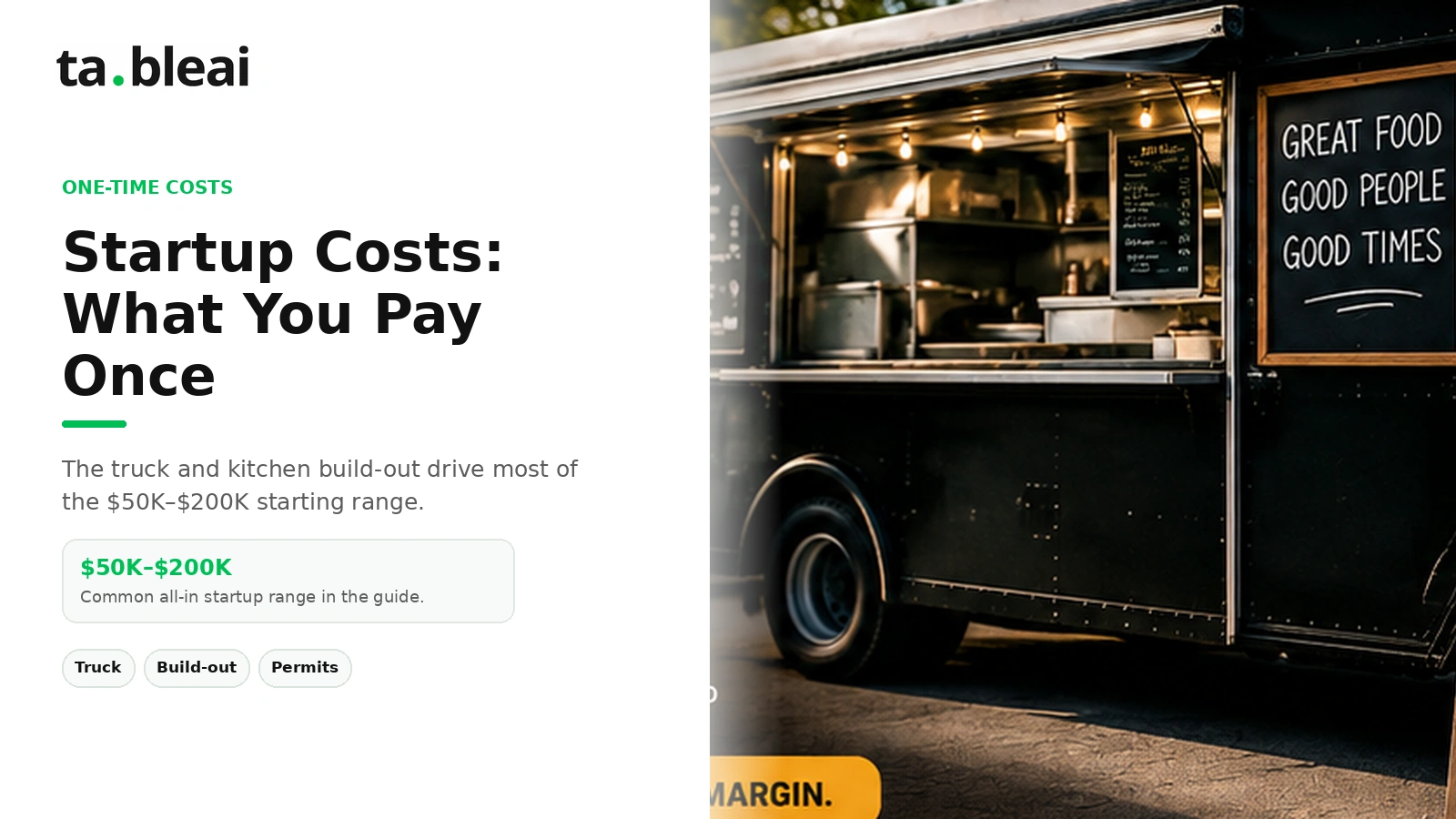
| Budget item | What your quote should specify |
|---|---|
| Vehicle | Purchase price, condition, inspection, and initial repairs |
| Kitchen and conversion | Equipment already included versus equipment still needed |
| Power, water, and ventilation | Installation and requirements for your menu and location |
| Permits and inspections | Each jurisdiction where you intend to operate |
| Insurance and deposits | Coverage, initial payments, and recurring premiums |
| Commissary or parking | Deposit, access hours, storage, and recurring charges |
| Opening inventory | Food, packaging, cleaning supplies, and smallwares |
| Payments and technology | Hardware, setup, software, and connectivity |
| Cash reserve | Expenses during delays, quiet opening weeks, and repairs |
Avoid counting a fitted kitchen twice: if the truck quote already includes it, separate only the additional equipment or changes. Ask suppliers to itemize the quote so you can compare equivalent setups.
The US Small Business Administration's planning guidance recommends separating one-time and monthly expenses. Apply that distinction to deposits, financed equipment, and recurring access fees as well as the vehicle itself.
A worked monthly expense example
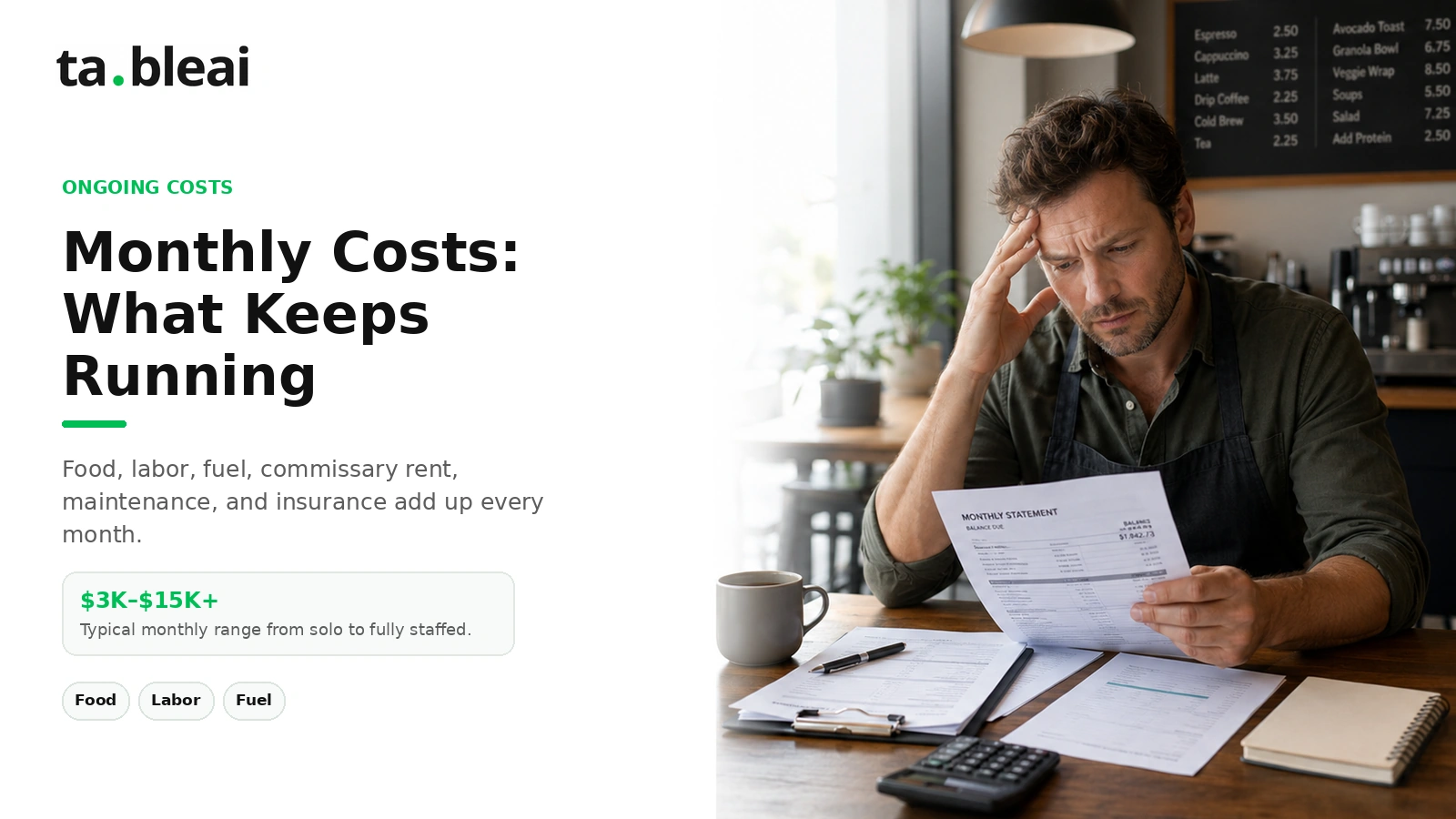
This is an illustrative budget for an owner-operated truck with a part-time helper. It is not a survey, a customer case study, or a statement of typical local prices.
Assume monthly sales of $18,000, food cost of 30%, and the following other inputs:
| Monthly input | Example amount |
|---|---|
| Food used: 30% × $18,000 | $5,400 |
| Part-time helper | $1,800 |
| Commissary rent | $700 |
| Fuel | $500 |
| Maintenance reserve | $600 |
| Insurance | $400 |
| Permit allocation and spot fees | $300 |
| Payment processing and tools | $300 |
| Total listed expenses | $10,000 |
The remaining $8,000 is not net profit. This simplified example does not include owner pay, income taxes, debt payments, depreciation, or any other costs missing from your setup. Packaging, payroll-related costs, and event commissions must also be included wherever they apply.
Food and paid help account for $7,200: 72% of these listed expenses, or 40% of the assumed sales. Those percentages answer different questions. Keep the denominator clear when comparing budgets.
Replace the flat payment-cost allowance with your actual percentage fees, per-transaction fees, and software charges. Replace the labor allowance with paid hours, wage rates, and applicable employment costs.
How sales change the budget
Some expenses move with sales; others continue on a quiet day. With the example's 30% food-cost assumption, $12,000 of sales would imply $3,600 in food cost. Rent and insurance would not automatically fall by the same proportion.
Model a quiet month as well as your expected month. Use the restaurant break-even guide to work out the sales needed to cover fixed costs and variable expenses.
Measure actual food cost using inventory, purchases, and sales in the food-cost calculator. Purchases alone can mislead when stock levels change.
Before you buy a truck
- Define the menu and equipment it requires.
- Confirm the local operating and inspection requirements with the relevant authorities.
- Have the vehicle and installed equipment inspected.
- Obtain itemized quotes for missing work and recurring services.
- Budget for opening delays and repairs.
- Check whether the quiet-month forecast covers cash outgoings and your own pay.
These checks are more useful than assuming one internet cost range applies to every city and concept.
Track actual costs after opening
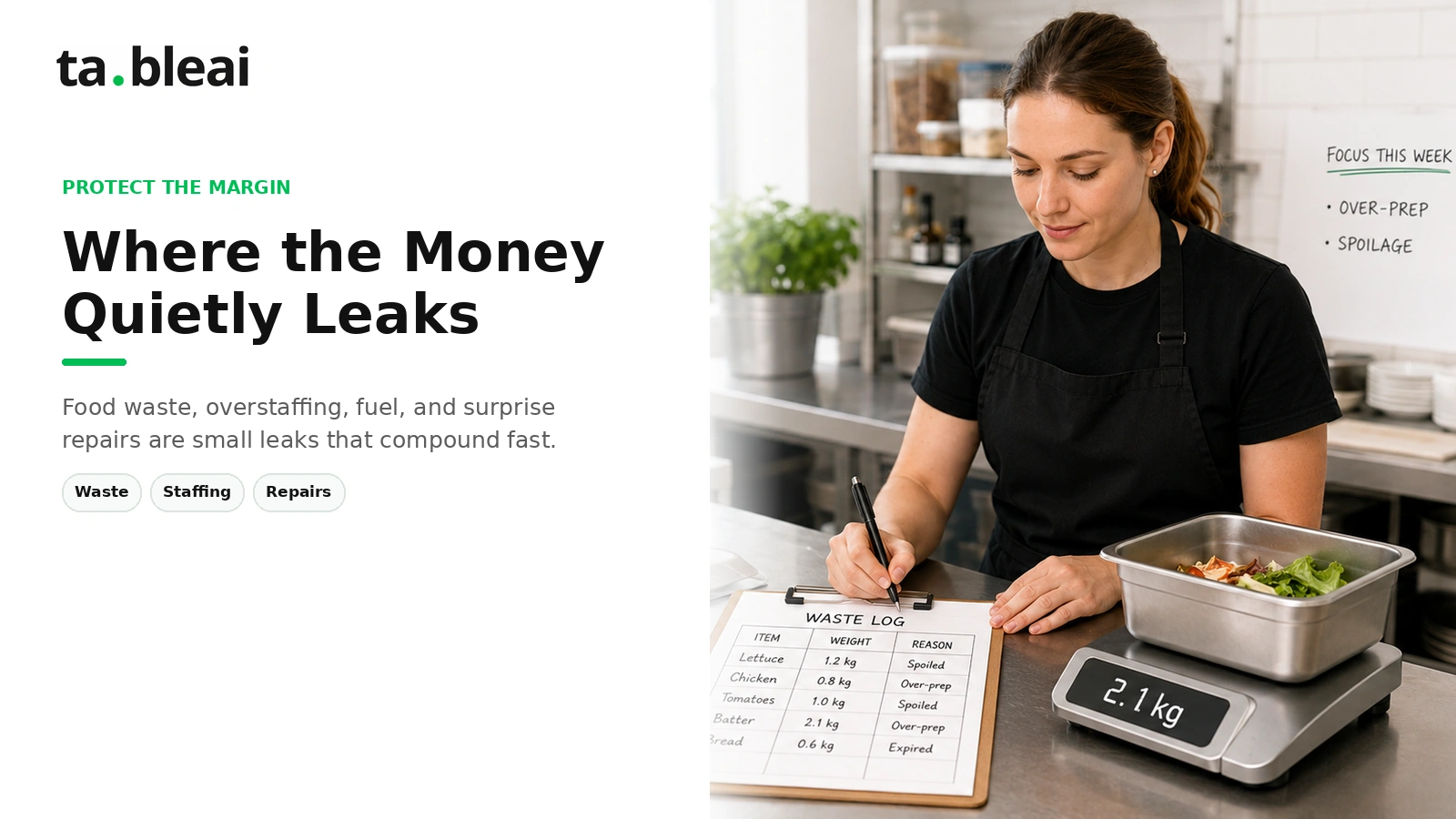
Record daily sales, purchases, waste, and paid hours. Compare actual expenses with your budget weekly and reconcile inventory at the period boundary. Our food-truck operating guide covers the daily routine.
TableAI is our WhatsApp-based tool for operating records. It can help record sales and stock updates, but it does not replace a payment processor or a complete accounting system. See TableAI for food trucks for its intended workflow.
Common questions
Is a used truck always cheaper overall?
Not necessarily. Compare the purchase price plus repairs, conversion work, downtime, and equipment needed for your menu. A lower sticker price can leave more work before opening.
What does a food truck cost per month?
There is no single reliable total without sales, staffing, and local quotes. The worked example totals $10,000 of listed expenses on $18,000 of sales and explicitly excludes several owner-specific costs. Use its categories to build your own budget.
Should I include my own pay?
Include the cash you need to take out of the business when evaluating whether the operation supports you. A budget that only works with unpaid owner labor may not meet your needs.